

Connections and Iterations


Base Model


Building Participant 1

Building Participant 2


Building Participant 3


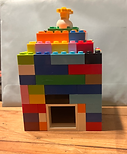
Quiddity through a human variation
Asking Random participants to build a building from scratch


Their unpredictable input adds haecceity, but the quiddity remains the base logic shaping the experience.
Similarities in the design process
All builders engage creatively, whether they are trained architects or everyday participants. Each person uses some form of intuition, pattern recognition, or visual judgment when placing LEGO bricks. Despite differences in experience, everyone is shaped by the same material limits—brick size, color, and how pieces connect. No matter their skill level, most aim to build something that feels balanced, expressive, or “right” in their own way. This shared creative instinct highlights a common thread across all contributions in the project.
Iterations:


Final Model
In my final model, I was inspired to move toward a more abstract form, breaking away from purely structured design. The decision to include a concrete-like base came from my earlier base model, which grounded the sculpture and gave it weight and stability. This foundation acted as a visual anchor, allowing the rest of the form to evolve more freely above it. The abstract upper sections were directly inspired by the diverse styles and instincts of all the participants who contributed. Their input pushed me to embrace unpredictability and explore how expressive, irregular building could coexist with a solid, intentional base.